
October is Domestic Violence Awareness Month, a moment to shine a light on a crime that affects more than 12 million people per year. This year marks an especially challenging time for survivors of domestic violence (DV).
Between funding delays and uncertainties for survivor services, freshly torn holes in the social safety net, and more complex needs emerging, survivors face mounting barriers to stability and healing. For immigrant survivors of DV, these challenges are just the start.
What Unique Barriers Do Immigrant Survivors of DV Face?
Abusers weaponize immigration status as a means of control.
Nearly all of the survivors we serve at Ayuda report that their abusers threaten to call the police or ICE on them to coerce compliance.
Heightened fear of seeking help or calling the police.
Survivors consistently express reluctance to report physical or sexual violence to the police, citing pervasive fears that local authorities will collaborate with federal enforcement and are biased against immigrants.
Support is meaningless without language access.
Even in regions with robust networks of services for DV survivors, immigrant survivors are often unintentionally excluded from accessing programs that lack interpretation or translation services.
Undocumented immigration status affects every part of life.
From the ability to work to putting food on the table with SNAP to securing housing, a survivor’s immigration status can be a cloud over everything.
What Are Immigrant Survivors of DV Dealing With Right Now?
Advocates across the spectrum have decried that Trump 2.0 policies are only making these barriers even worse. In some cases, shifts on the local and federal level have dovetailed into new nightmares for the survivors we serve. The federal encouragement of collaboration between local police and ICE, for one thing, has profoundly impacted immigrant survivors in D.C. and Virginia.
As the National Guard continues patrolling in D.C., and the Metropolitan Police Department (MPD) maintains their collaboration with ICE operations, our clients have never been more afraid to seek help or call the police. Immigrant survivors face an impossible choice between enduring harm at home, or phoning 911 and potentially being separated from their family.
In Virginia, a Freedom of Information Act (FOIA) request of Loudoun County Sheriff’s Department documents recently revealed that a woman in Sterling called 911 to report abuse at the hands of her partner. After the call, LCSD shared her photo and residence with ICE, putting her at even greater risk of potential arrest.
Immigrant survivors can seek temporary legal status by applying for a U visa, but only when they work with law enforcement to bring their perpetrators to justice. Police department collaboration with ICE, however, makes survivors now think twice about seeking protection.
How Ayuda Offers Immigrant Survivors of DV a Helping Hand
 At Ayuda, we support immigrant survivors every day with the legal, social, and language access services they need to rebuild their lives. We’ve seen the reality of what these mounting barriers translate into for our clients. Our teams have adapted services in bold ways to respond.
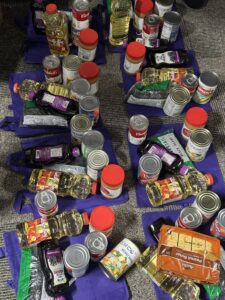
Since immigration enforcement began ramping up at the start of 2025, we’ve offered clients virtual appointment options wherever possible. Thanks to the Capital Area Food Bank, we have also been able to bring Ayuda’s food pantry right to our clients’ doors.
When the survivors we serve need to make police reports, their case manager or attorney helps them assess their own risk and is by their side during every police station visit. Particularly in jurisdictions known for formal and informal ICE collaboration, our clients still may forgo reporting out of fear.
Whether a survivor is still living with his abuser or is on the brink of independence, Ayuda’s case managers work with each client experiencing DV to draft emergency plans to navigate any volatile situations. Our teams also help survivors line up family and financial safety plans, to secure what matters most in the event of a worst-case scenario encounter.
How You Can Support Immigrant Survivors of DV
Advocate that your police department STOPS collaborating with ICE.
Even if you live in a jurisdiction that has a formal 287(g) agreement establishing collusion with ICE, officers may be providing informal support to immigration enforcement beyond the scope of the arrangement. The Center for Policing Equity has a helpful guide for ensuring your local cops are focused on supporting public safety – not immigration enforcement.
Always start by listening.
If you worry that a loved one is being abused, or if a loved one discloses abuse to you, start by showing up to listen. Do not tell them what to do, or take action on their behalf that they did not ask for. The National Domestic Violence Hotline has guidance on being survivor-centered support.
Go ultra-violet with us for Purple Thursday (October 15).
On the third Thursday of October each year, advocates across the country – including our teams at Ayuda – wear purple in support of DV Awareness. Share your purple fit with the hashtag #PurpleThursday on social media, and tag Ayuda so that we can spread the love!
Get involved with your local nonprofits serving immigrant survivors.
Like Ayuda! Not that we’re biased….from donating to volunteering, most community-based DV advocates offer a variety of ways that you can bolster the ecosystem of services available to DV survivors.
Safe and Accessible DV Services for Immigrant Survivors in DC, MD, and VA
Ayuda — DC, MD, and VA
Ayuda provides legal, social, and language access services for immigrant survivors of domestic violence, and operates a walk-in clinic in D.C. To seek our services, call the Ayuda office located in your state:
- D.C.: 202-387-4848
- Maryland: 240-594-0600
- Virginia: 703-444-7009
Beyond Ayuda, a number of our partners and nonprofit colleagues offer language-accessible services for DV survivors regardless of their immigration status.
Ashiyanaa — DC, MD, and VA
Culturally responsive domestic violence support and case management for South Asian survivors, plus senior services, English-language support, and job readiness assistance for immigrants. ashiyanaa.org
Asian/Pacific Islander Domestic Violence Resource Project — DC, MD, and VA
Free, confidential crisis intervention, safety planning, peer support, case management, court accompaniment, and referrals to legal services and shelter. Support is available in more than 20 Asian/Pacific Islander languages. www.dvrp.org
Boat People SOS (BPSOS) — VA
Case management and legal assistance for immigrant survivors, including protection orders and uncontested divorces. bpsos.org/
Bread for the City — DC
Food, clothing, medical care, social services, and legal assistance for residents with low incomes. Legal services include certain housing, family law, immigration, and public benefits matters. breadforthecity.org
DC SAFE — DC
Domestic violence crisis intervention, safety planning, emergency shelter access, protection order assistance, and legal referrals. The Spanish-language ACCIÓN Line is available 24/7 at 1-866-962-5048. www.dcsafe.org
District Alliance for Safe Housing (DASH) — DC / Greater DC region
DC / Greater DC region. Emergency and transitional safe housing, housing assistance, safety planning, advocacy, and resource referrals for survivors of domestic and sexual violence and their families. dashdc.org
Doorways — VA
omestic and sexual violence crisis support, shelter and housing assistance, counseling, and court advocacy. 24/7 hotline: 703-237-0881. www.doorwaysva.org
Ethiopian Community Development Council (ECDC) — DC / Greater DC region
Refugee resettlement, employment assistance, case management, legal aid assistance, and culturally responsive support and referrals for immigrant survivors of domestic violence, crime, and trafficking. acc-dc.org
The Family Place — DC
Free Spanish-language family support, early childhood education, home visiting, case management, adult education, and distributions of food, clothing, and diapers for families with low incomes. www.thefamilyplacedc.org
La Clínica del Pueblo — DC, MD, and VA
Bilingual medical care, mental health services, pharmacy services, case management, health education, and community support, with a focus on Latino and immigrant communities. lcdp.org
Latinos in Virginia Empowerment Center (LIVE) — VA
Bilingual domestic and sexual violence crisis support, safety planning, case management, emergency housing assistance, court and hospital accompaniment, and free legal clinics.
LAWS Domestic Violence & Sexual Assault Services — VA
Emergency shelter, domestic and sexual violence support, legal services, services for children and youth, and Spanish-language assistance. 24/7 hotline: 703-777-6552. lcsj.org
Mary’s Center — DC and MD
Medical, dental, and behavioral health care, education, and social services. Domestic violence support includes safety planning, case management, shelter placement through partners, and connections to legal support. www.maryscenter.org
My Sister’s Place — DC
Emergency shelter, transitional housing, safety planning, and supportive services for domestic violence survivors and their children. Case management is available to participants in its housing programs. 24/7 hotline: 202-540-1064; translation services available. www.mysistersplacedc.org
Tahirih Justice Center — DC, MD, and VA
Free, confidential legal services and social services case management for immigrant survivors of gender-based violence, including domestic violence, sexual assault, human trafficking, and forced marriage. www.tahirih.org
Volare — DC
Free legal representation, survivor advocacy, crisis support, short-term therapy, support groups, and court or hospital accompaniment for survivors of crime. Its DV LEAP project provides appellate advocacy beyond DC.