

A child should never have to stand alone in a courtroom. For 15 years, this was the shared, bipartisan standard in the U.S. Through federally funded legal services, organizations like Ayuda have helped unaccompanied children understand their rights, navigate immigration court, and access legal representation.
But today, these systems are being dismantled, years of precedent are being thrown out the window, and immigrant children are facing an unprecedented crisis. Recent policies enacted by the Trump administration are directly targeting both unaccompanied children and the legal aid networks that defend them, denying organizations owed funds, fast-tracking deportations, and utilizing mass transfers to expedite removals.
To understand the stakes today, let’s first go back to 1987 when an eighteen-year-old named Ricardo Sanchez arrived in our nation’s capital from Peru.
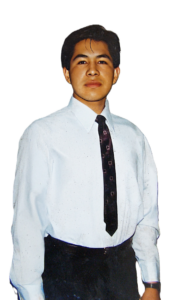
A young Ricardo Sanchez, at Latino News.
Meet Dr. Ricardo Sanchez
Ricardo came to the United States alone, without any documentation, and only spoke a handful of words in English. His home country of Peru was immersed in socio-political and economic struggle, and over the course of the 80’s to early 90’s, 3.5 million people left the country. Ricardo was one of them.
Fresh out of high school and driven by the need to support his younger family and six younger siblings, he pursued opportunity in the U.S. His first few years were marked by struggle, newness, and adaptation, while he worked as a dishwasher and relied heavily on the kindness of acquaintances. Ricardo notes that the immigrant experience is defined by a difficult paradox: Survival inherently requires vulnerability, yet trust is hard-earned and easily broken.
Then, through word of mouth, he heard about Ayuda, a place that provided help for immigrants like him, “just off Columbia Road.”
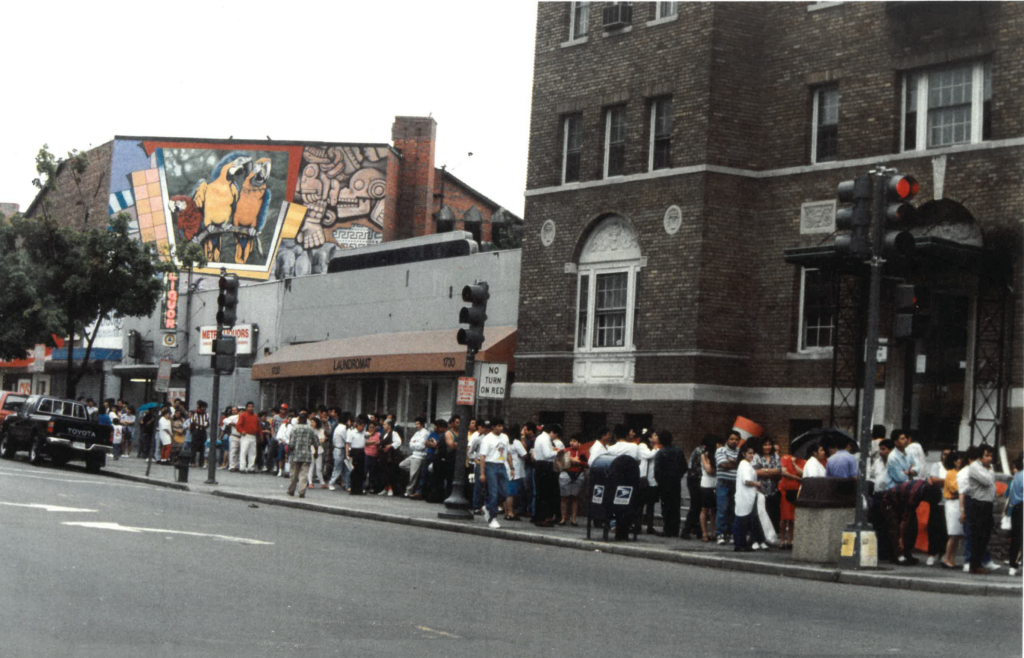
Immigrants line up to seek services at a previous Ayuda office.
He says that Ayuda was the first place that earned — and sustained — his trust. There, he met law students from Georgetown and George Washington University, who helped him secure a work permit and counseled him on how to navigate basic services such as healthcare and higher education opportunities.
Years later, he smiles as he recalls Leslye Orloff, who founded and led Ayuda’s Clínica Legal Latina, the first program in D.C. and one of the first in the nation to offer holistic legal services to immigrant survivors of domestic violence, child abuse, sexual assault, and human trafficking. The name has stuck with him years later.
“Clínica means healing,” Ricardo explains, “At a time where it was difficult to trust people, Ayuda was just that: healing.”
Ayuda became his anchor, helping him manage everything from complex immigration filings to the mundane tasks of American life, like finding an affordable doctor when he was sick or filing taxes for the first time. Grounded by that early stability, and support from mentors and friends along the way, Dr. Sanchez built a life.

Dr. Ricardo Sanchez, present day portrait.
Today, Dr. Sanchez is an adjunct professor at George Washington University, a clinical mental health counselor working with trauma survivors in Fairfax County, and an author. His experience fuels his passion for helping young people and those who are new to this country. Part of Ricardo’s work is dedicated to giving back to the cause via
Border Talks, community-centered conversation series designed to explore the human realities of immigration, identity, and belonging, and to bring humanity back to the dialogue. He is a reminder of how immigrants, when given opportunities to thrive, shape the United States into the best version of itself.
Unfortunately, today’s unaccompanied immigrant youth live under threat from a cruel and unprecedented deportation campaign. The circumstances of Ricardo’s case were different from those facing unaccompanied children today, as he pursued a different legal pathway to citizenship. But the lesson of his story remains urgent: When young immigrants can access trusted legal guidance and community support, they have a meaningful opportunity to build safe and productive lives.
Today, that opportunity is being placed further out of reach for thousands of children.
3X the Deportations: How the Trump Administration Is Targeting Unaccompanied Kids
Imagine navigating one of the most complex legal regimes in the world as a child so young that you cannot yet read, vote, drive, or speak English. You might have survived the unimaginable: trafficking, forced labor, severe abuse, or war in your home country. You have endured far more than any child should. Yet instead of finding safety and protection, you are forced into even deeper trauma and hardship.
That’s the situation thousands of children in the U.S. immigration system — some as young as two years old — are facing. It’s a landscape far more hostile than the one Dr. Sanchez encountered. Deportations of unaccompanied children have tripled since the final years of the last Trump administration, with immigration courts now issuing more than 10,000 removal or voluntary departure orders every single month, according to analysis by ProPublica.
Removal + Departure Orders Issued to Kids Each Month.
How Legal Representation Makes All the Difference
For these unaccompanied children, having an attorney by their side in court is often the determining factor of whether they stay in the U.S., or are forced to return home to their home country. Immigration judges are 100 times more likely to grant relief to unaccompanied children with legal representation than those without it, according to a 2024 Congressional Research Service report.
Even with a strong case, it’s so difficult to prove an immigration case without a lawyer that from 2005 to 2017, more than 90% of unaccompanied children without representation were issued an order of removal or voluntary departure. Conversely, unaccompanied children who have legal representation — at any point of their case — are seven times more likely to receive an outcome that allows them to stay in the U.S.
These stark statistics are why Ayuda’s work, and that of several other legal service providers, matter, as the last line of defense standing between children and wrongful deportation. Currently, Ayuda is representing 263 unaccompanied children, and there are more than 20,000 immigrant kids impacted across the country.
Unaccompanied Children Receiving Legal Services from Ayuda
Unaccompanied Children's Legal Services At Risk Across the Country
As the Trump administration continues to target these children and the organizations that support them, we all pay the moral and social price in the lost potential of future educators, counselors, and community leaders locked out of their own futures.
The system worked for Dr. Sanchez because there were greater and better-funded pathways to justice, not just de facto removal. For the sake of the children waiting in fear and limbo today, it’s a choice we should preserve.
Stand With Immigrant Children
Reenactment based on typical immigration court proceedings. Photo by Linda Freeman.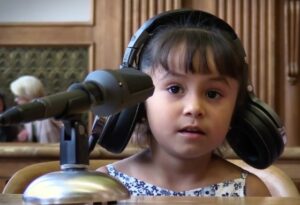
A contribution to Ayuda helps provide the legal representation, court preparation, and child-centered support that each case requires. It costs approximately $10,000 to represent and support one child for a year.
Attorneys and law firms can also help through pro bono representation, legal screenings, clinics, and other volunteer opportunities supporting children navigating the immigration system.
Donate to protect a child’s right to be heard, or contact Ayuda to explore pro bono partnership opportunities.